 BOSS ORTHOPAEDICSPatrick Pallitto, M.D.
BOSS ORTHOPAEDICSPatrick Pallitto, M.D.
BOSS ORTHOPAEDICSPatrick Pallitto, M.D.
Procedure
Dr. Patrick Pallitto uses the direct anterior approach for nearly all of his hip replacement cases. Rather than accessing the joint from the back or side of the hip, the direct anterior approach works through the front of the hip, moving between natural muscle planes rather than cutting through muscle — a technique associated with less muscle disruption for many patients.
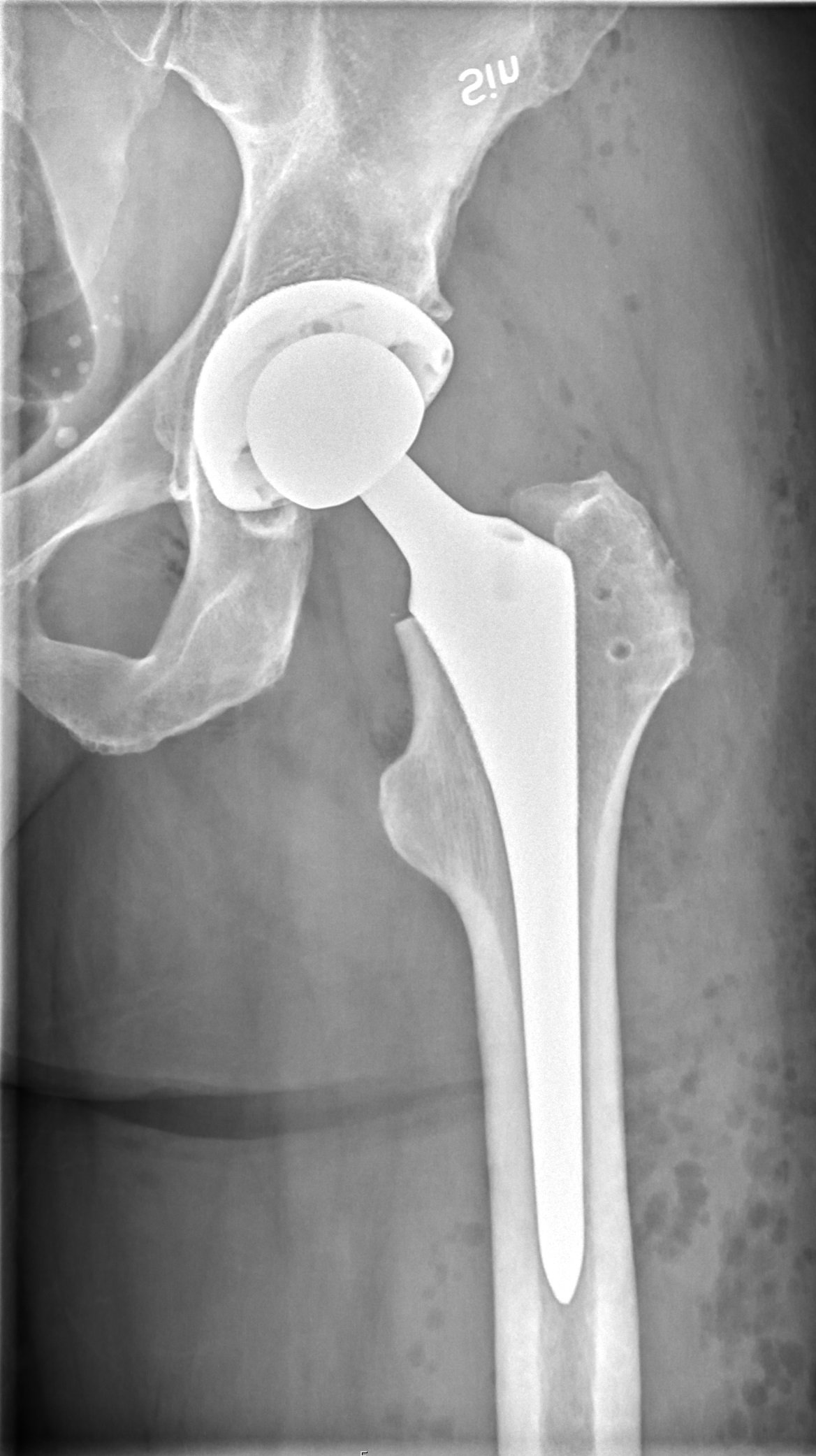
Postoperative X-ray, total hip replacement (anteroposterior view). Image: Mikael Häggström, M.D., CC0 / Wikimedia Commons.
How It Works
Accesses the hip joint through the front, working between muscles rather than cutting through them. Many patients experience less muscle disruption with this approach.
The more traditional approach, accessing the joint from the back of the hip. Dr. Pallitto reserves this approach for select cases — for example, revision of a prior posterior hip replacement.
Dr. Pallitto uses the direct anterior approach for nearly all of his patients. The posterior approach is reserved for select cases, such as revision of a prior posterior hip replacement.
What to Expect
Surgery typically takes around 1 hour.
Most patients go home the same day or spend one night in the hospital.
Unlike the traditional posterior approach, the anterior approach does not require hip precautions — there's no need to avoid bending past 90° or crossing your legs during recovery.
Most patients begin walking with assistance just a few hours after surgery — early movement is one of the best predictors of a smooth recovery.
Recovery
Every patient's recovery timeline is different. Physical therapy begins the day of surgery, and in-home physical therapy begins once you're home. Outpatient physical therapy is added based on your specific recovery path.
Good to Know
As with any surgery, hip replacement carries risks, which may include infection, blood clots, dislocation, leg length differences, implant wear or loosening over time, and nerve or blood vessel injury. The anterior approach carries an additional, generally temporary risk of numbness on the outer thigh from the lateral femoral cutaneous nerve. Dr. Pallitto discusses your individual risk factors during consultation.
Good to Know
The anterior approach allows for faster recovery, better restoration of leg length, and a lower dislocation rate compared to the traditional posterior approach.
No. Unlike the posterior approach, the anterior approach does not require hip precautions during recovery.
Dr. Pallitto uses the anterior approach for nearly all of his patients. The posterior approach is reserved for select cases, such as revision of a prior posterior hip replacement.
There's no age cutoff. Candidacy is based on your symptoms and how much hip pain is limiting your daily life — not your age.
Where We Practice