 BOSS ORTHOPAEDICSPatrick Pallitto, M.D.
BOSS ORTHOPAEDICSPatrick Pallitto, M.D.
BOSS ORTHOPAEDICSPatrick Pallitto, M.D.
Procedure
If a prior hip replacement is causing pain, instability, or has worn over time, Dr. Pallitto provides evaluation and revision surgery to restore function and relieve pain. Revision hip replacement is a more complex procedure than a first-time (primary) hip replacement, and Dr. Pallitto tailors the surgical plan to the specific reason your original implant needs revision.
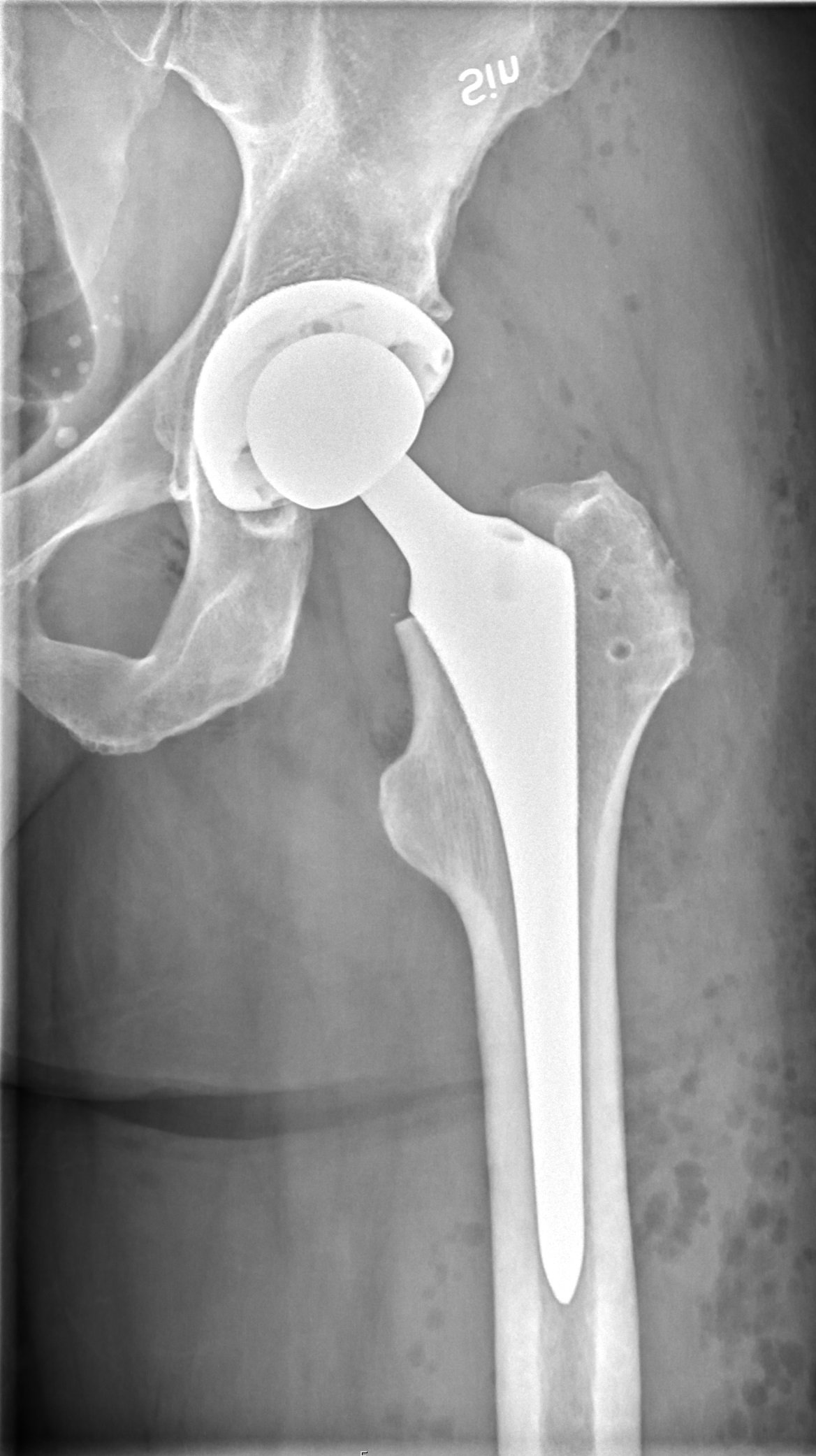
Postoperative X-ray, total hip replacement (anteroposterior view). Image: Mikael Häggström, M.D., CC0 / Wikimedia Commons.
Understanding Revision
Dr. Pallitto evaluates a failing hip replacement with X-rays and, when infection is a concern, lab work to determine the cause before recommending a surgical plan.
Good to Know
Revision hip replacement carries the same general risks as primary hip replacement — including infection, blood clots, dislocation, leg length differences, and nerve or blood vessel injury — generally at a higher rate than a first-time replacement due to the added surgical complexity. Dr. Pallitto discusses your individual risk factors during consultation.
Where We Practice